A clear phonics teaching sequence with free printable worksheets, activities, flashcards, lesson plans, and classroom posters—from letter sounds to simple reading.
Amanda Williams
Updated: 36 minutes ago
046
Phonics is one of the most reliable ways to help children learn to read. When you teach letter–sound relationships clearly, and in a sensible order, children gain a tool they can use on almost any new word—not only the ones they have memorized.
This guide walks through a practical phonics journey: letter sounds, blending, CVC words, digraphs, blends, vowels, and simple reading practice. Along the way you will find printable worksheets, games, flashcards, lesson plans, and classroom posters you can open in Design Room.
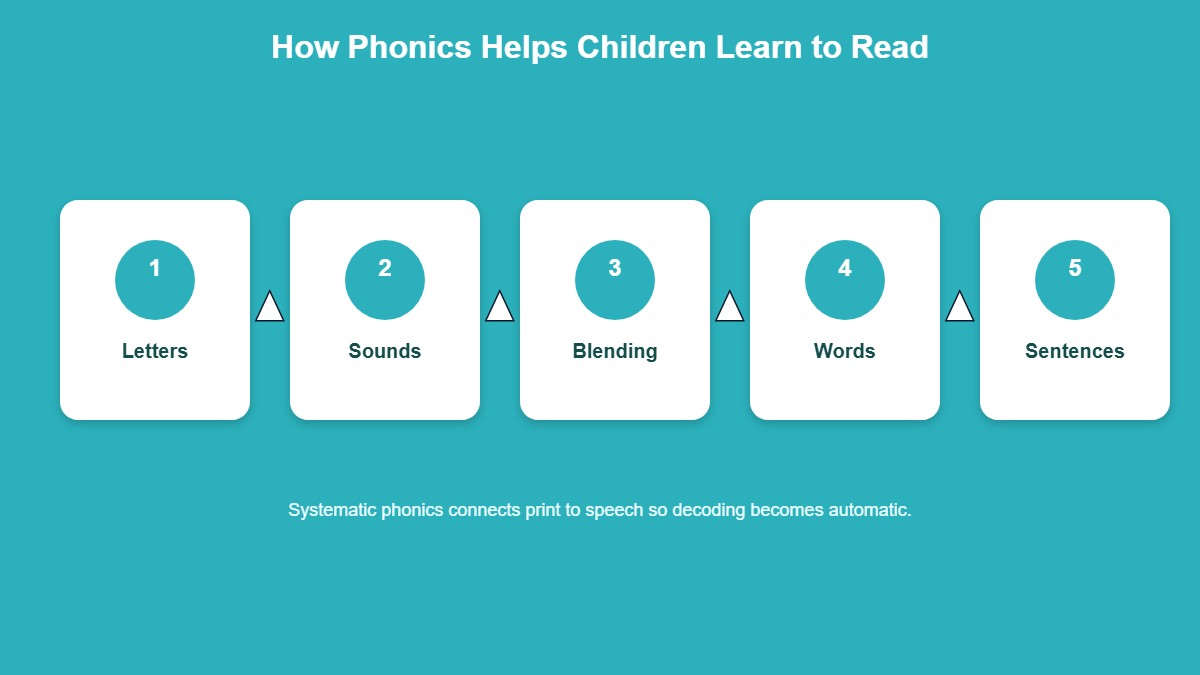
Phonics links letters to sounds so children can blend into words and sentences.
Phonics teaches the connection between letters (graphemes) and sounds (phonemes). Children learn to look at print, retrieve sounds, and blend those sounds into words. That is different from guessing from pictures or memorizing every word as a whole shape.
Strong phonics instruction does not replace reading aloud, vocabulary, or comprehension—it unlocks the code so those skills can grow. If children cannot decode, they burn attention on sounding out and have little left for meaning.
Keep early lessons short, clear, and cumulative. Master a small set of sounds before adding new ones, and practice blending every day.
2. The Phonics Sequence Teachers Should Follow
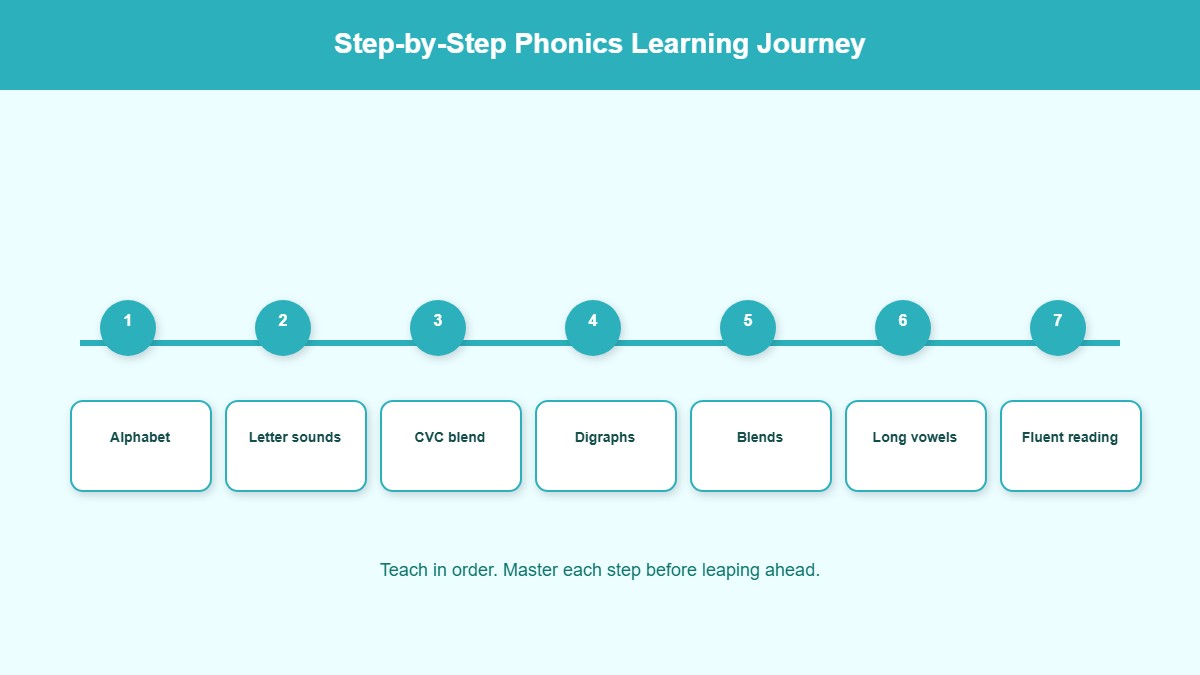
A practical sequence from alphabet sounds through blending to fluent reading.
Most effective programs follow a similar path:
Phonemic awareness (oral sounds, no letters yet)
Consonant and short-vowel letter sounds
Blending into CVC words (cat, pin, hop)
Consonant digraphs (sh, ch, th, wh)
Consonant blends (st, bl, nd)
Long vowels / silent-e, then vowel teams
Heart words (high-frequency words with irregular parts) can run alongside this sequence, but they should not replace decoding practice. Pair this journey with alphabet and blend printables when you need extra reps.
3. Teaching Letter Sounds First
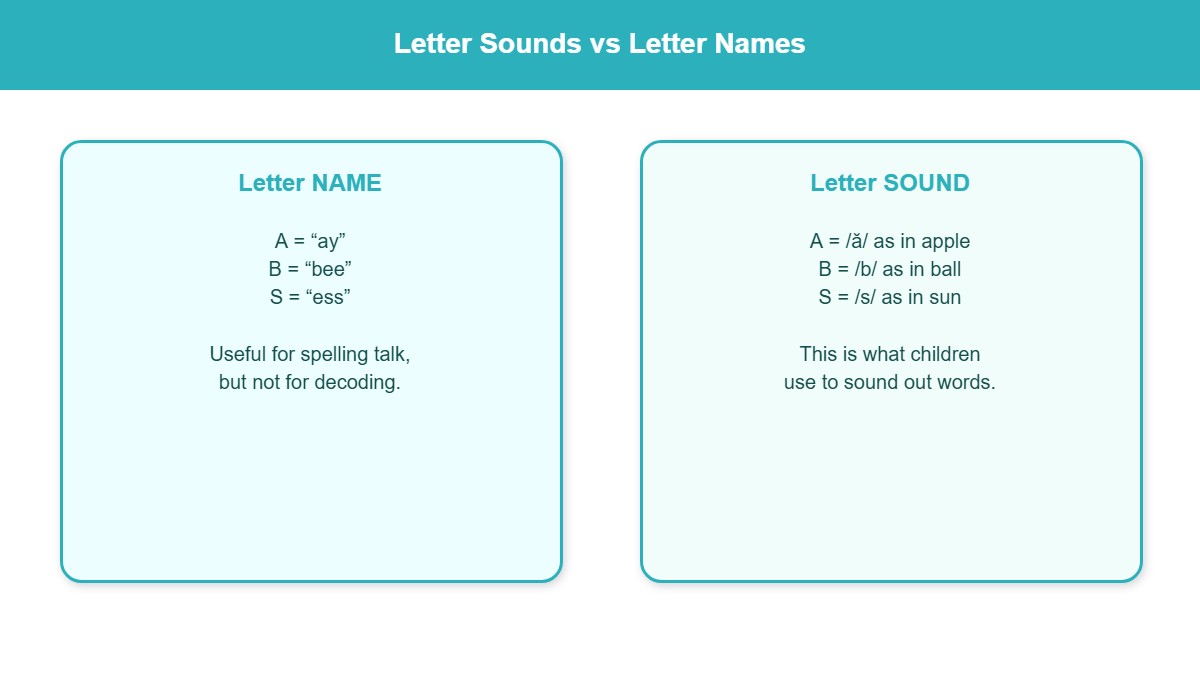
Teach sounds for decoding; letter names alone are not enough to read new words.
Start with sounds, not letter names alone. Knowing that B is called “bee” does not help a child read bat; knowing /b/ does. Teach continuous sounds first when you can (m, s, f, n), model mouth position, and keep practice multi-sensory: see it, say it, trace it, write it.
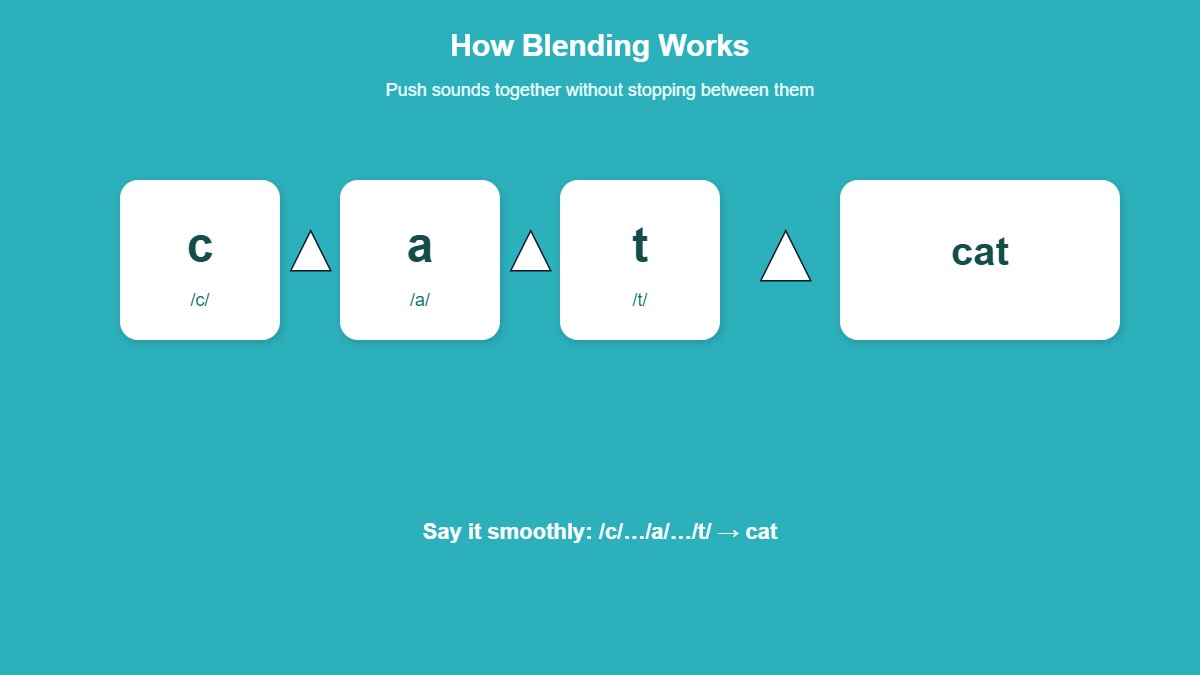
Blending means saying each sound, then smoothly merging them into a word.
Blending is the moment phonics becomes reading. Children say each sound, then push the sounds together without stopping: /c/ /a/ /t/ → cat. Use sound boxes, finger slides, and successive blending. Stay with CVC until accuracy is solid before rushing into longer patterns.
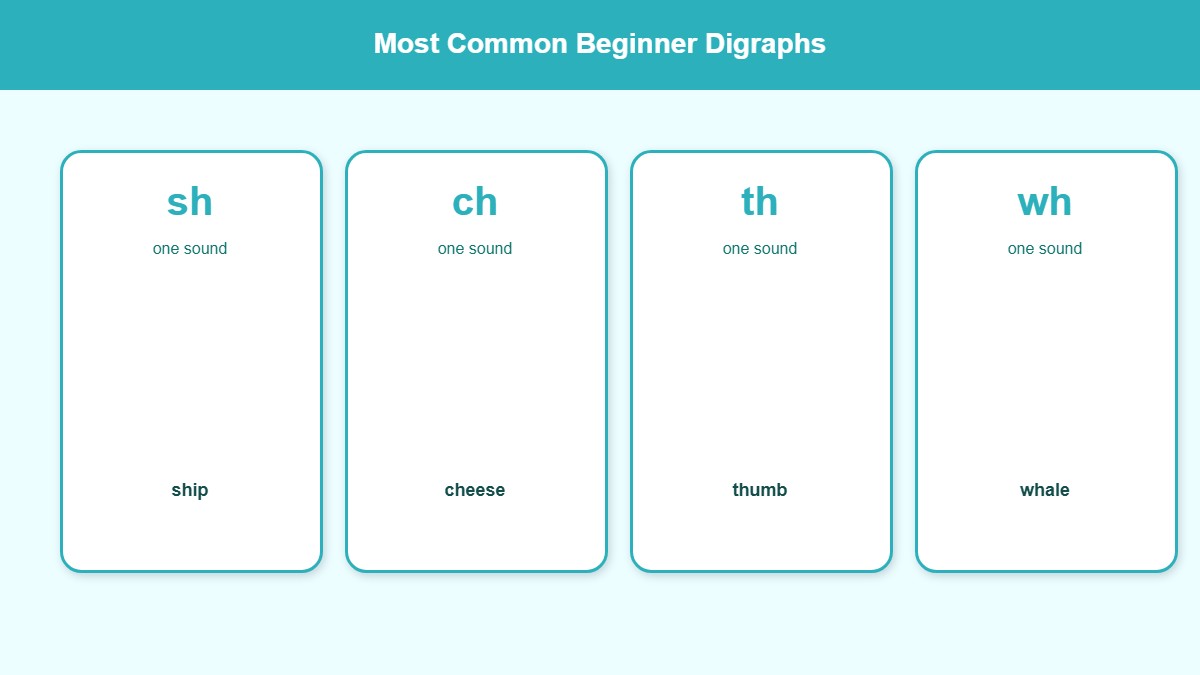
Beginner digraphs: two letters that make one new sound.
Digraphs are two letters that make one new sound (sh in ship). Blends are two (or three) consonants where you can still hear each sound (st in stop). Teach the difference explicitly—many children confuse them.
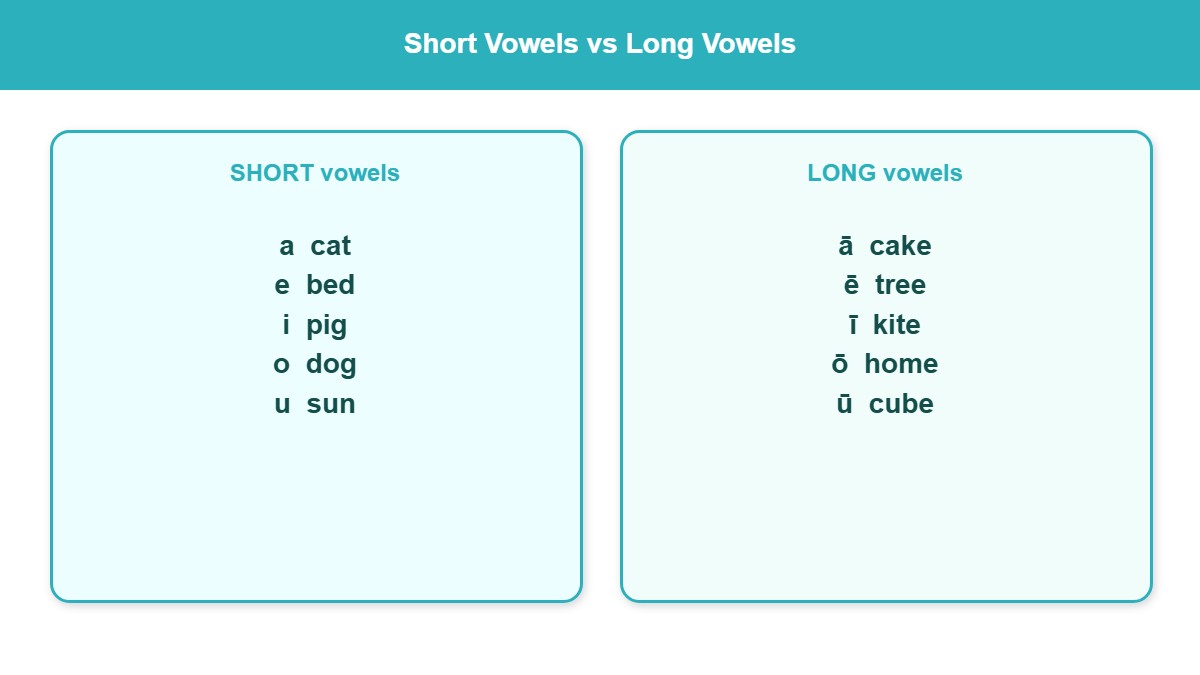
Short vowels are quick; long vowels often “say their name.”
Short vowels appear early in CVC work (/ă/ in cat). Long vowels often “say their name” and need patterns such as silent-e (cake) or vowel teams (rain, tree). Contrast short vs long with sorting, not only word lists.
Move from isolated words to sentences and short decodable texts. Keep the phonics load controlled so children can succeed. Celebrate accurate sounding-out, then reread for fluency. Connect decoding wins to comprehension with reading comprehension strategies.
Games keep practice joyful without abandoning the code. Use centers, partner play, and movement, but keep the phonics target obvious. Mix in flashcard sets and a weekly review lesson so skills stick.
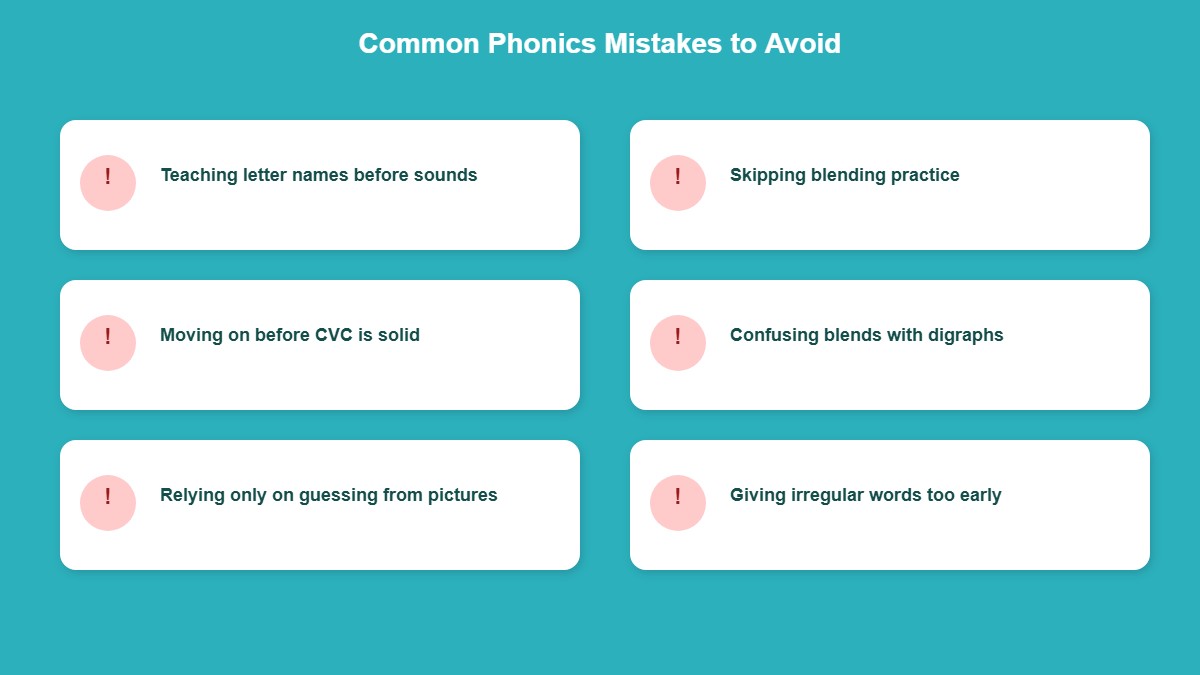
Avoid these common pitfalls so phonics instruction stays clear and cumulative.
Watch for these traps: teaching names before sounds, skipping blending, advancing before CVC is secure, treating blends like digraphs, encouraging picture guessing instead of decoding, and flooding children with irregular words too early. Correct gently, model again, and return to a simpler step when accuracy drops.
Classroom reminders help. Hang an anchor chart and keep a predictable correction routine: “Look at the letters → say the sounds → blend.”
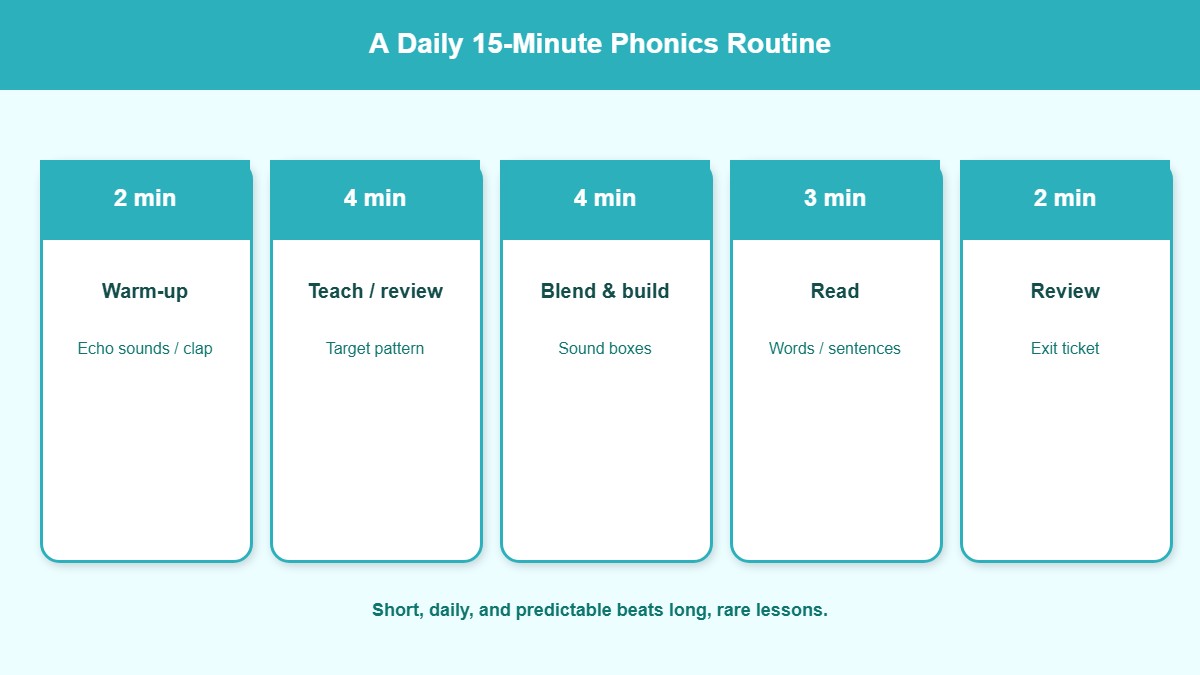
A simple 15-minute daily routine keeps phonics practice consistent.
Fifteen focused minutes beat an occasional long lesson. Try: warm-up sounds (2), teach or review the pattern (4), blend and build (4), read words or a short sentence (3), quick review (2). Use the same routine at home or school so children know what success looks like.
Phonics works when it is systematic, explicit, and practiced daily. Start with sounds, blend into CVC words, add digraphs and blends, then grow into longer vowel patterns and connected reading. Use printables as practice—not as the whole lesson—and keep joy in the room with games and short wins.
Common questions answered for downloading and using our premium printable designs.
Start with phonemic awareness, then letter sounds, blending into CVC words, digraphs, consonant blends, and later long vowels and vowel teams. Keep each step solid before moving on.
Prioritize letter sounds for decoding. Letter names are useful later for spelling talk, but sounds are what children use to read new words.
A digraph is two letters that make one sound (sh in ship). A blend is two consonants where you can still hear each sound (st in stop).
For beginners, 10–20 focused minutes daily is often more effective than occasional long sessions. Consistency matters more than marathon practice.
Yes. Teach decoding through phonics, and teach a small set of high-frequency heart words alongside—without replacing blending practice. See our sight words guide for play-based ideas.
Open the embedded Design Room templates above, or browse /worksheets/english/phonics, /flashcards/phonics, /lesson-plans/english/phonics, and /posters/english/phonics.
I'm an education resource creator passionate about making learning simple, practical, and engaging for teachers, parents, tutors, and students. I create printable worksheets, lesson plans, classroom activities, and learning resources designed to support effective teaching both in the classroom and at home.

 Amanda Williams
















Comments (0)
Leave a Reply
Be the first to leave a comment!