
How to Teach Reading Comprehension (+Free Passages & Examples)
Improve reading comprehension with printable passages, question examples, worksheets, classroom activities, and practical teaching strategies.
 Amanda Williams
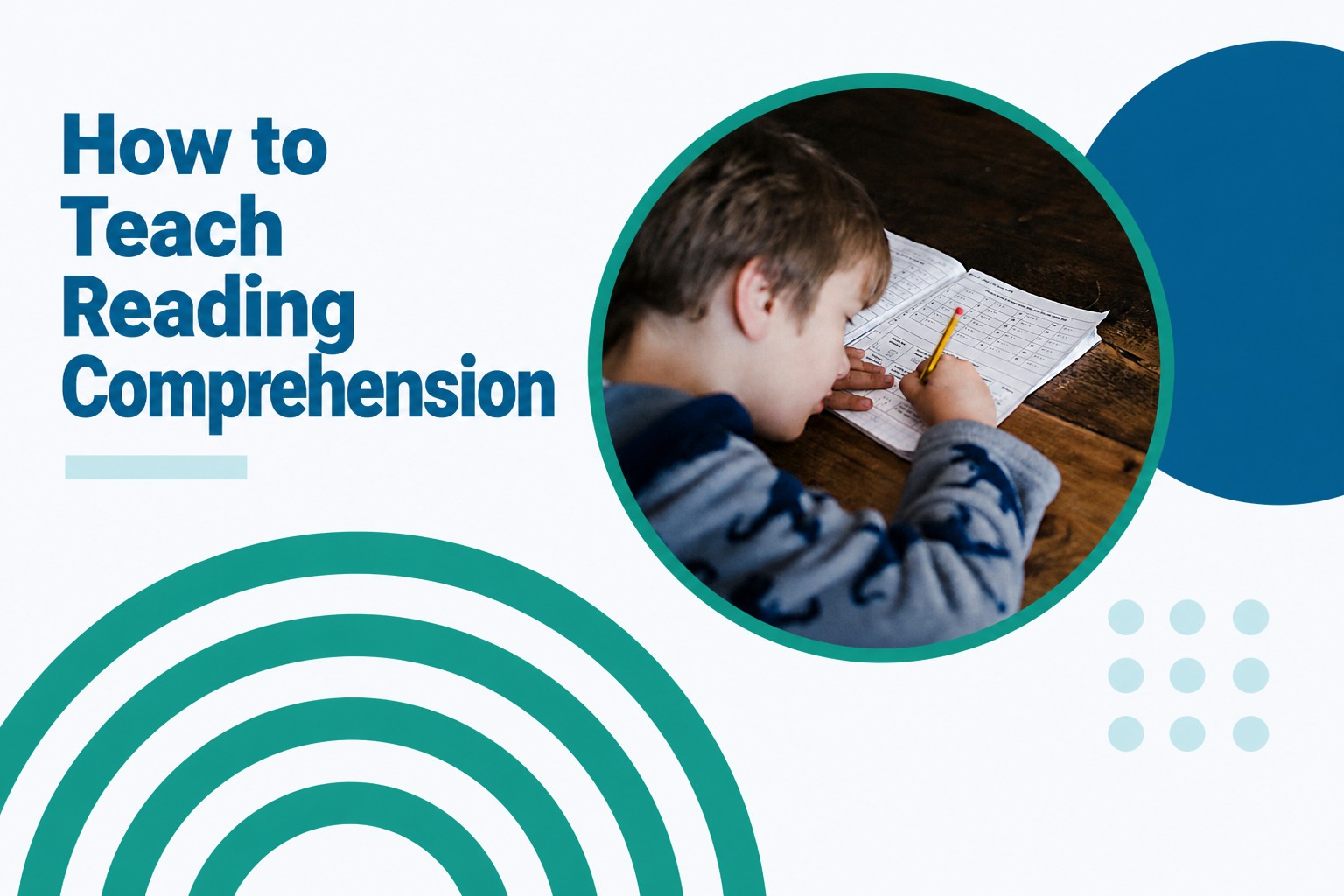
Reading comprehension is thinking with text. Students need decoding and fluency, but they also need strategies for making sense of ideas, monitoring confusion, and talking about what they read.
Confirm the foundations
If a student labors over every word, comprehension will suffer. Address phonics and fluency alongside strategy instruction. For many learners, rereading a short passage for smoothness unlocks attention for meaning.
Teach strategies explicitly
Name the strategy, model it, practice together, then release responsibility. High-value strategies include:
- Predicting with evidence
- Asking questions while reading
- Visualizing
- Clarifying confusing parts
- Summarizing key ideas
- Inferring with text clues plus background knowledge
Do not teach all strategies at once. Deep practice with one or two beats a poster full of unused tips.
Use think-alouds
Read a short section aloud and stop to show your thinking: “I expected the character to apologize, but the text says… so I’m revising my idea.” Students need visible mental models of what skilled readers do when meaning breaks down.
Make talk the engine of understanding
Turn-and-talk, partner retells, and text-dependent discussion push students to process ideas. Ask questions that require evidence: “Which sentence shows the character changed?” rather than only “Did you like it?”
Teach different text types
Narratives need attention to characters, problem, and change. Informational texts need main idea, key details, text features, and vocabulary. Show students how headings, captions, and diagrams support meaning.
Scaffold without doing the thinking for them
Use graphic organizers briefly, provide sentence stems for evidence talk, and chunk long texts. Gradually remove supports. The goal is independent monitoring: students noticing when they do not understand and knowing what to do next.
Check understanding often
Exit tickets, one-sentence summaries, sketch notes, and quick quizzes reveal gaps early. Celebrate thoughtful mistakes—they show active reading. Over time, students should leave a text able to explain the big idea in their own words.



Comments (0)
Leave a Reply
Be the first to leave a comment!