
How to Teach Sight Words (+Free Games & Worksheets)
Practical ways to teach sight words at home and school — including help for struggling readers, Dolch vs Fry lists, common mistakes, FAQs, and free printable games and worksheets.
 Amanda Williams
Watching a child read their first sentence without stopping to sound out every word is a special moment. Often, that confidence comes from learning sight words. These are the words children see so often that they eventually recognize them instantly.
Table of Contents
- 1. Start Small Instead of Teaching Long Lists
- 2. Introduce Words in Context
- 3. Read the Same Books More Than Once
- 4. Make Sight Words Part of Everyday Life
- 5. Turn Practice into Play
- Free printable sight word games
- 6. Use Flashcards the Right Way
- Free printable beginner flashcards
- 7. Practice Writing as Well as Reading
- Free printable sight word worksheets
- 8. Helping Struggling Readers Learn Sight Words
- Slow down and review what they know
- Use several senses at once
- Hear words in real sentences
- Keep phonics alongside sight words
- 9. Teaching Sight Words at Home
- Place words where they will see them
- Use bedtime stories as practice
- Write short everyday notes
- 10. Should You Teach Dolch or Fry Sight Words?
- Dolch Sight Words
- Fry Sight Words
- Which list should you choose?
- 11. Common Mistakes When Teaching Sight Words
- Moving too quickly
- Relying only on flashcards
- Correcting every mistake immediately
- Turning every lesson into a test
- 12. Bringing Everything Together
- A simple lesson flow
- Warm-up and new word
- Practice through reading and play
- Independent practice and wrap-up
- Keep the goal in focus
- 13. Final Thoughts
Instead of carefully sounding out the, and, you, or look every single time, they simply know them. That frees up their attention to focus on understanding the story instead of decoding every word.
Many parents worry that teaching sight words means asking children to memorize long lists, but that's rarely the most effective approach. Children learn best when sight words become part of everyday reading, conversation, games, and writing.
Whether you're teaching at home or in a classroom, the goal isn't to see how many words a child can memorize in one week—it's to help those words become familiar through meaningful practice.
The good news is that teaching sight words doesn't require expensive materials or hours of preparation. A few simple activities done consistently can make a huge difference over time.
1. Start Small Instead of Teaching Long Lists
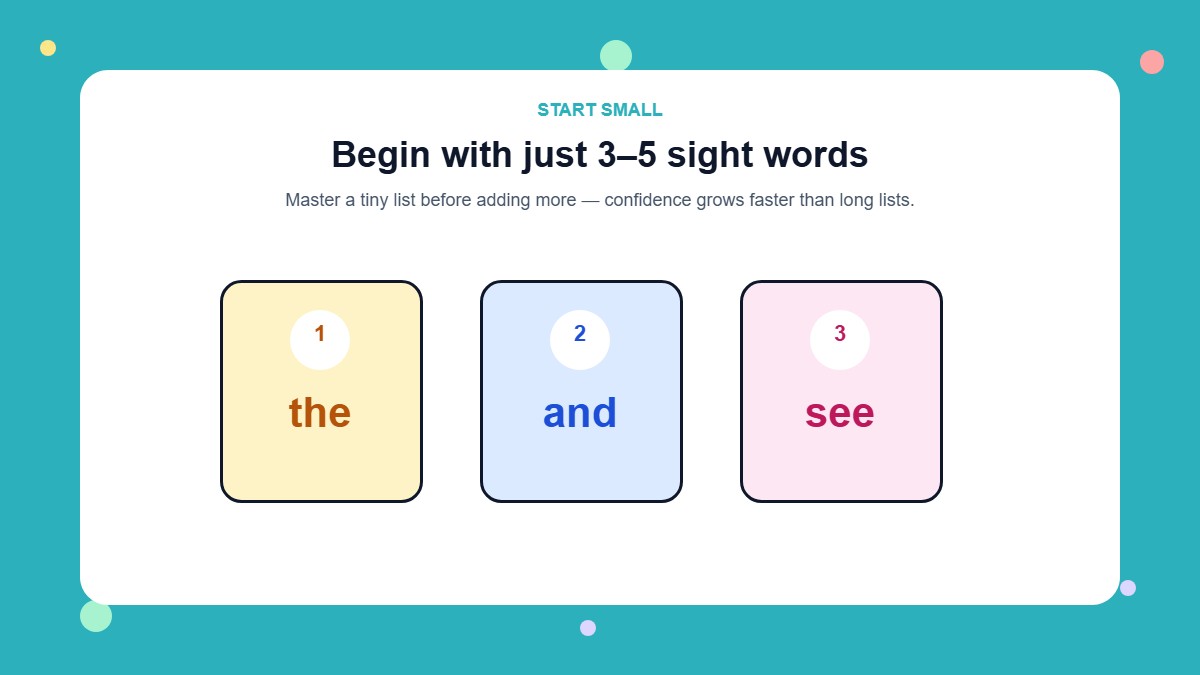
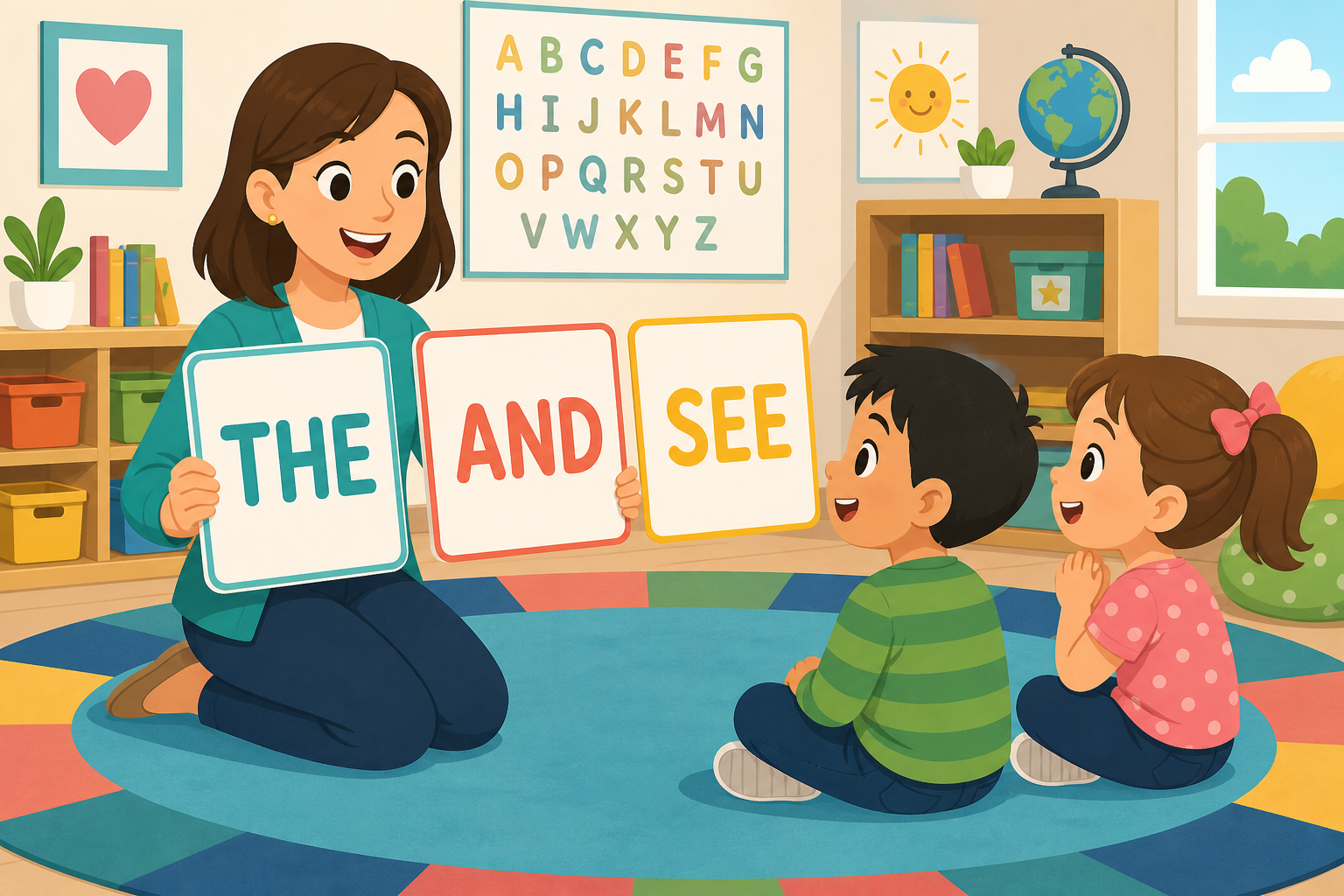
One of the most common mistakes adults make is introducing too many words at once. A child who is given twenty new words to remember will often mix them up or become frustrated. Instead, begin with three to five words and allow plenty of opportunities to practice them before introducing new ones.
For example, you might begin with:
- the
- and
- see
Use those same words throughout the week. Read them together, point them out in books, write them on paper, and encourage your child to notice them whenever they appear. Once those words can be recognized quickly, move on to the next small group.
Learning slowly but consistently builds confidence, and confidence is what keeps children motivated to continue reading.
2. Introduce Words in Context
Children remember words much better when they have a purpose.
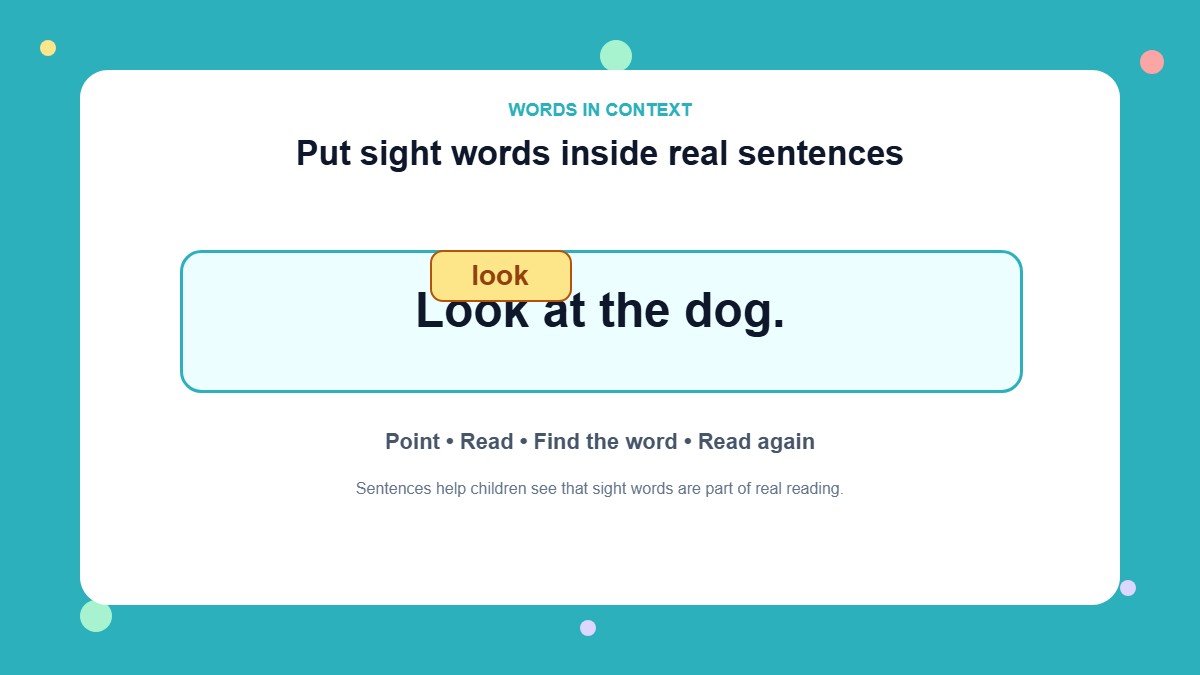
Instead of holding up a flashcard that simply says look, place the word inside a sentence.
Look at the dog.
Read the sentence together. Point to each word as you go. Ask the child where the word look is hiding. Then read the sentence again.
Using complete sentences helps children understand that sight words are part of real reading, not just isolated vocabulary to memorize.
Picture books work especially well because children naturally connect the words with illustrations, making the learning experience much more meaningful.
3. Read the Same Books More Than Once
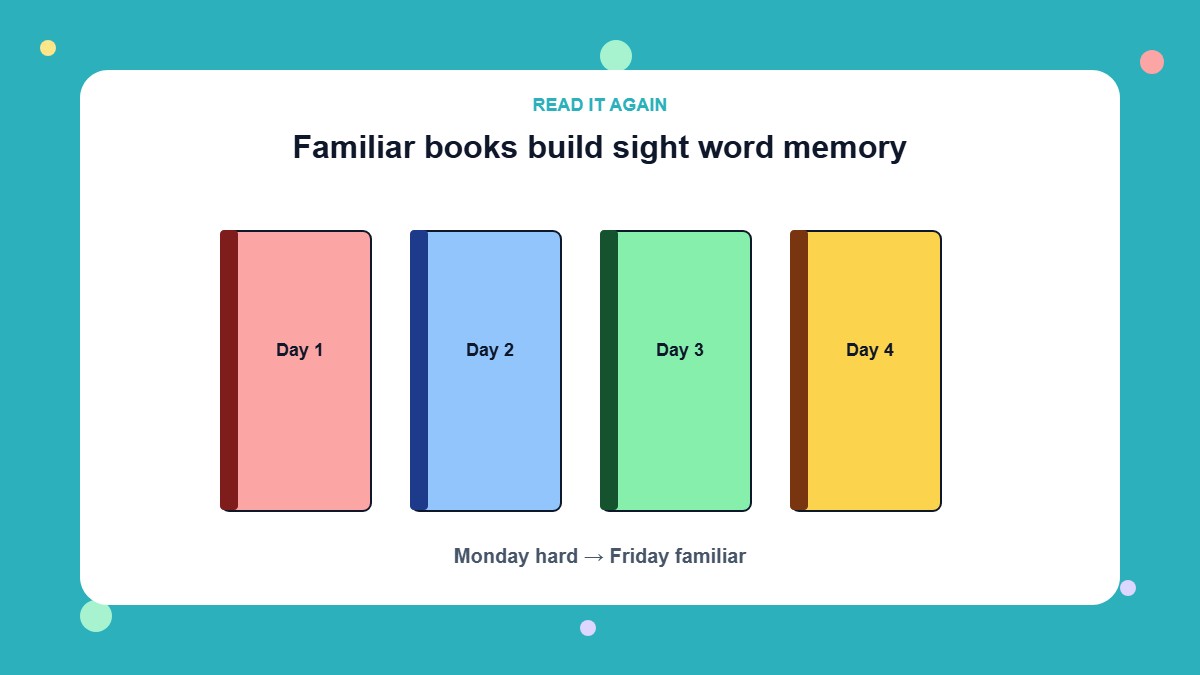
Many adults think children become bored by reading the same book repeatedly. In reality, repetition is one of the best teachers.
Each time a familiar book is read, children begin recognizing words they saw during previous readings. A word that was difficult on Monday may suddenly become familiar by Friday simply because it has appeared several times in the same story.
Choose books with simple, repetitive language. Pause occasionally and ask your child if they can find today's sight word somewhere on the page. Those little moments of discovery build confidence far better than endless drilling.
4. Make Sight Words Part of Everyday Life
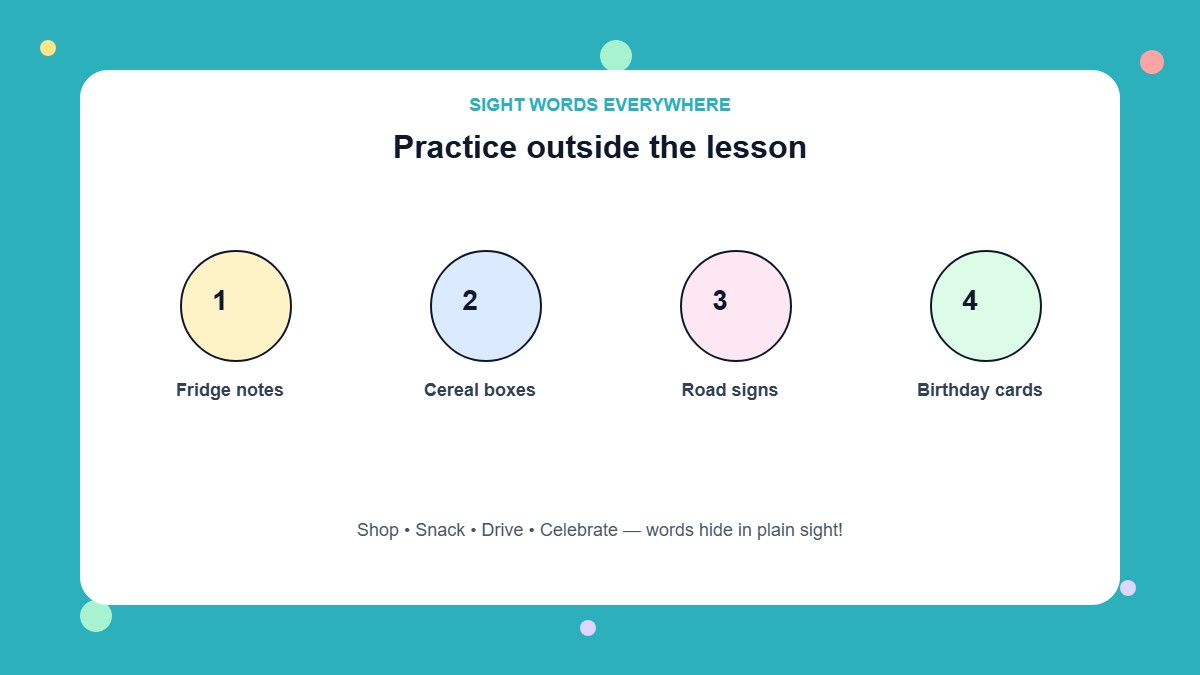
Learning shouldn't stop when the lesson ends.
Point out sight words while shopping. Notice them on cereal boxes. Read them on road signs. Find them in birthday cards. Even a quick game during dinner can become valuable practice.
You might say, “Can you find the word the in today's newspaper?” or “Who can spot the word look first in this story?”
Children often learn more from these natural moments than from formal lessons.
5. Turn Practice into Play
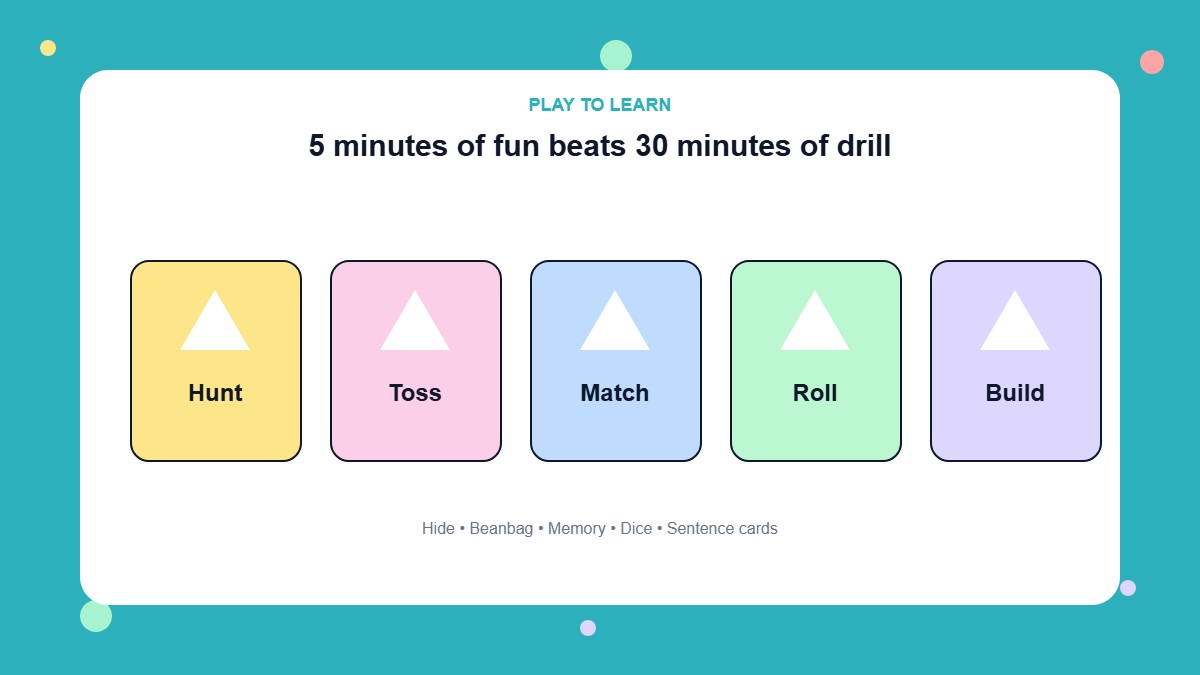
Young children learn through movement, imagination, and curiosity. Turning sight word practice into games keeps them interested and removes the pressure that sometimes comes with learning to read.
Some simple games include:
- Hide word cards around the room and let children search for them.
- Toss a beanbag onto the correct sight word.
- Play memory matching with duplicate word cards.
- Roll a die and read the matching word.
- Build simple sentences using movable word cards.
The activity doesn't have to be complicated. Five minutes of fun is often more effective than thirty minutes of repetition.
Free printable sight word games
Each game below is its own editable printable — open in Design Room or download the PDF.


6. Use Flashcards the Right Way
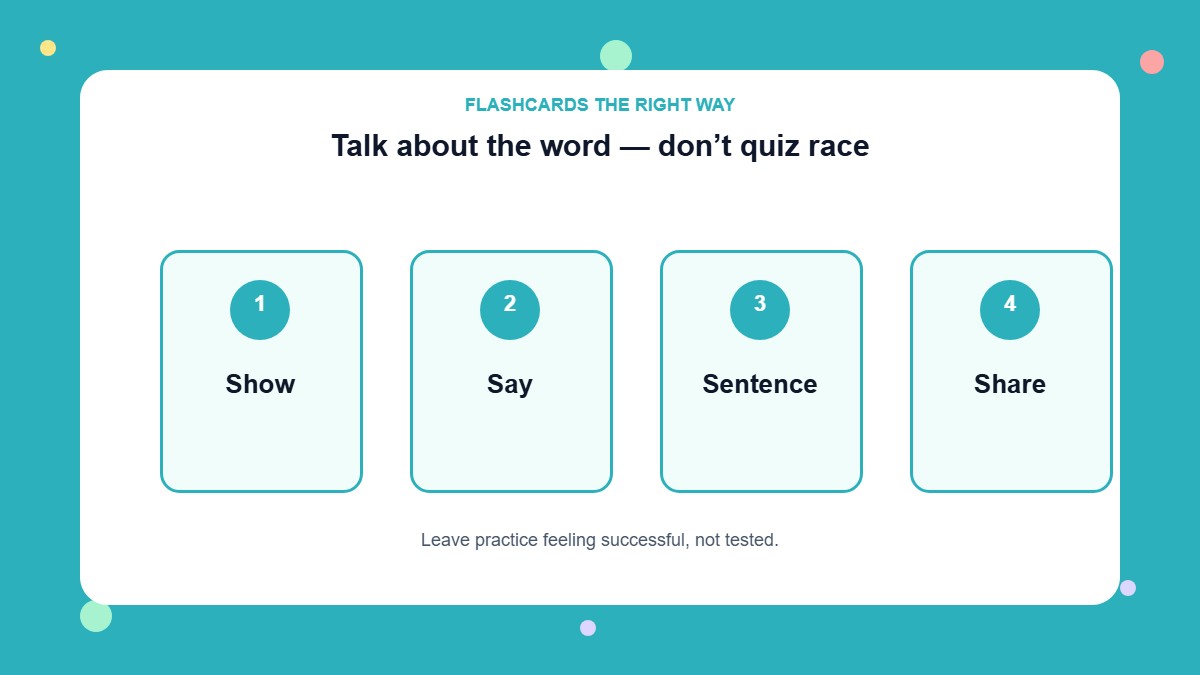
Flashcards are useful, but only when they're used for short, enjoyable practice.
Instead of rapidly testing children one card after another, turn flashcards into conversations.
Hold up a card. Read the word together. Use the word in a sentence. Ask the child to think of another sentence using the same word. Then place the card aside and continue.
Children should leave flashcard practice feeling successful, not tested.
Free printable beginner flashcards
Print the first 50 common kindergarten sight words as large cut-apart flashcards. Edit fonts or add reverse-side pictures in Design Room.

7. Practice Writing as Well as Reading
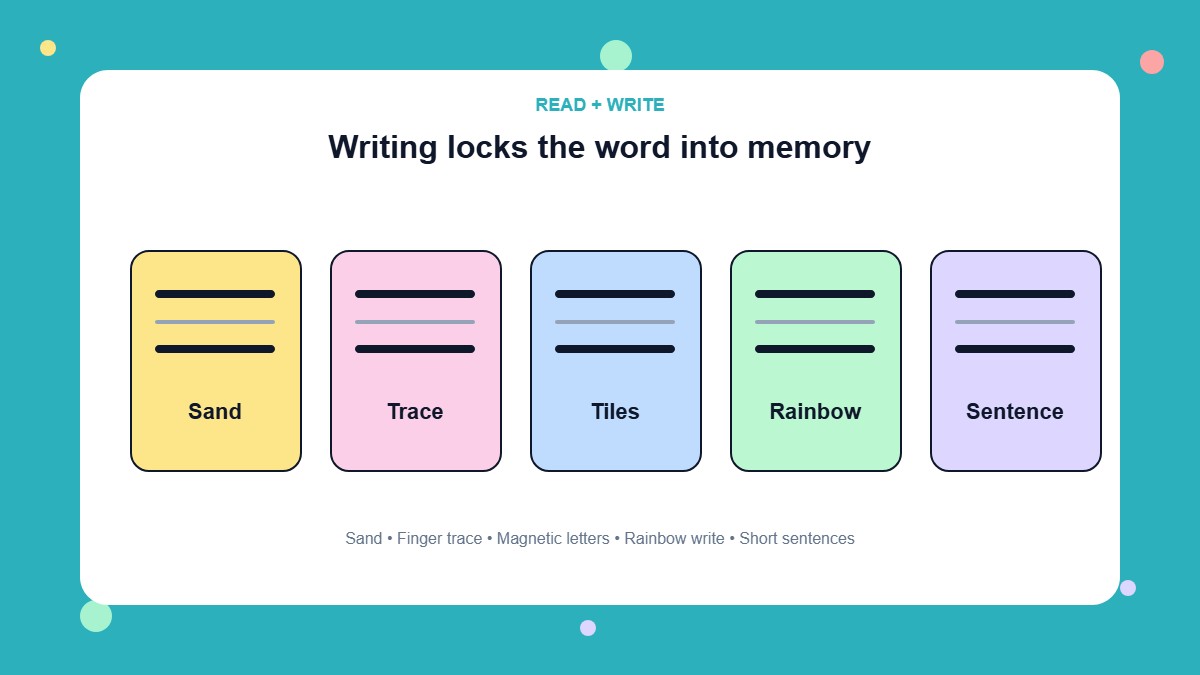
Reading and writing strengthen one another.
Once a child can recognize a sight word, encourage them to write it. This doesn't mean filling an entire page with the same word over and over.
Instead, try different activities: write the word in sand, trace it with a finger, build it using magnetic letters, write it with crayons, or rainbow write each letter using different colors. Finally, encourage the child to use the word in a short sentence — a gentle bridge into sentence writing.
Writing helps reinforce spelling while also improving memory — and pairs nicely with handwriting practice.
Free printable sight word worksheets
Each worksheet is listed separately so you can download only what you need.


8. Helping Struggling Readers Learn Sight Words
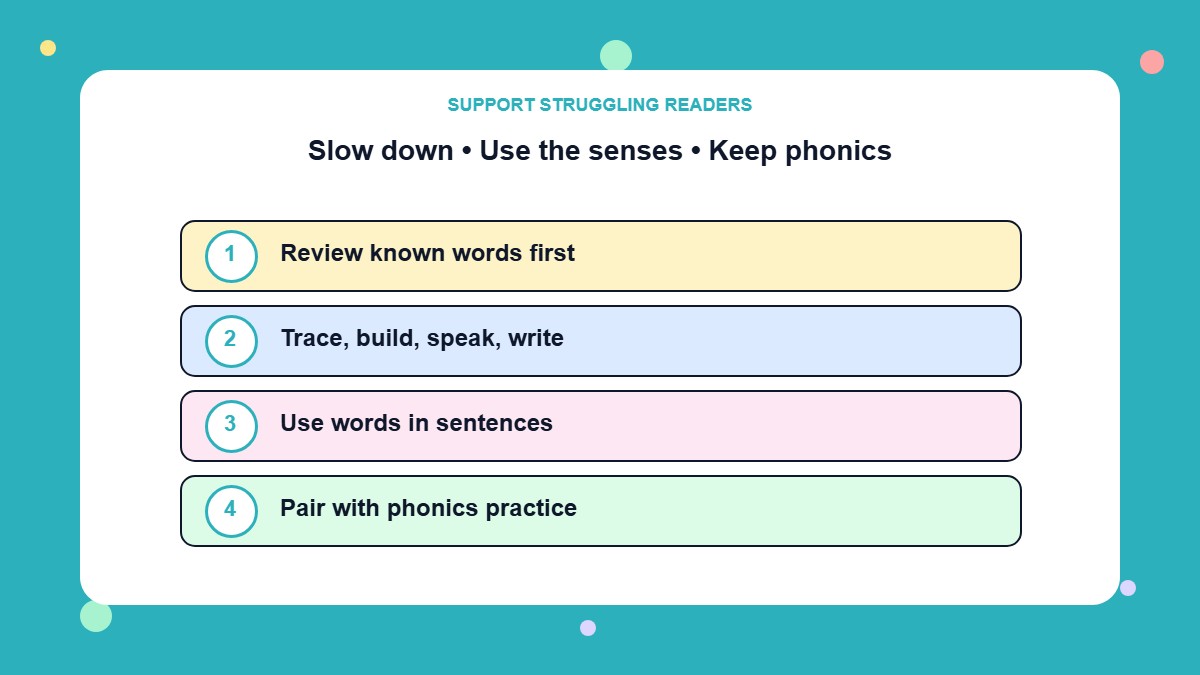
Some children pick up sight words quickly, while others need much more repetition. If your child or student struggles to remember words from one day to the next, don't assume they aren't trying. Reading develops at different speeds, and every child benefits from encouragement instead of pressure — the same patience that helps when you teach someone to read from the beginning.
Slow down and review what they know
The first step is to slow things down. Instead of introducing new words every lesson, spend extra time reviewing the words they already know. Celebrate small wins. If they confidently read five words today that they couldn't read last week, that's real progress.
Use several senses at once
Using several senses at once can also make learning easier. Let children trace words with their finger, build them using magnetic letters, write them with markers, or arrange letter tiles into the correct order. If letter names still feel shaky, a short detour into letter recognition or alphabet printables can unlock faster progress with sight words.
Hear words in real sentences
Children who struggle with reading also benefit from hearing the words in meaningful sentences rather than seeing them on isolated lists. Short books, simple classroom labels, and everyday conversations all become opportunities to reinforce learning without making it feel like another lesson.
Keep phonics alongside sight words
If reading remains difficult, continue building phonics skills alongside sight words. The two work together, and one should never completely replace the other — browse our phonics worksheets when you want structured decoding practice beside your sight word printables.
9. Teaching Sight Words at Home
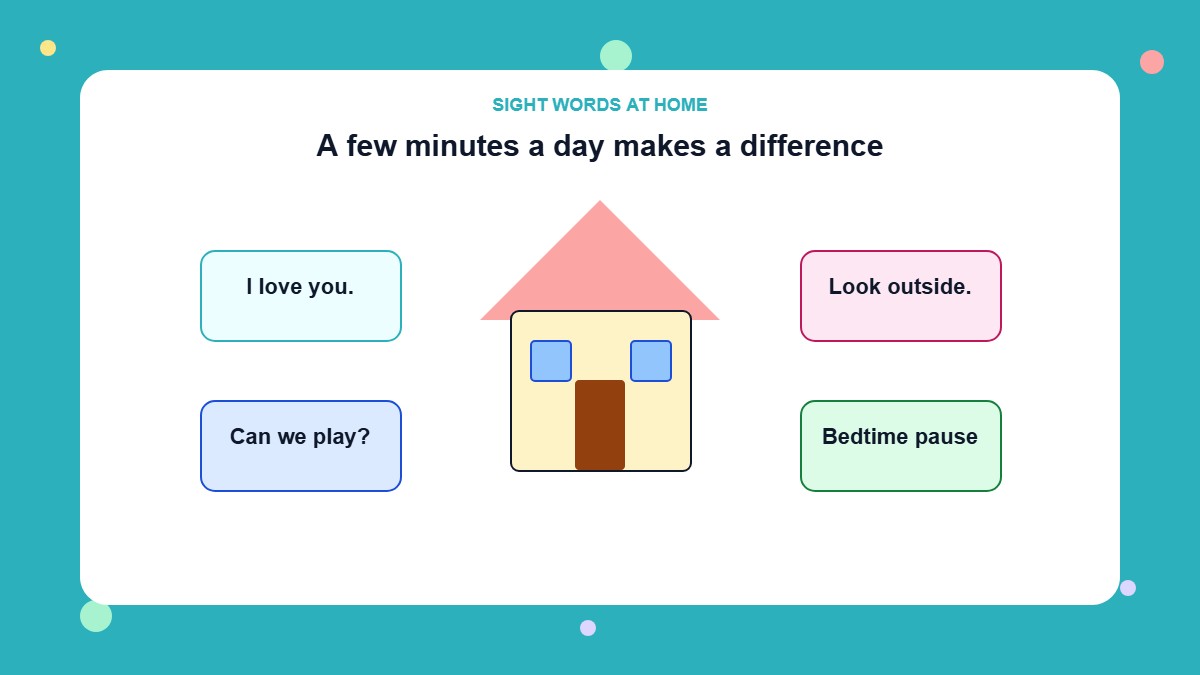
Parents often wonder if they need a structured reading program before teaching sight words. In most cases, they don't.
A few minutes every day can make a noticeable difference — whether you're supporting preschoolers or settling into a kindergarten routine.
Place words where they will see them
Choose a small group of words and place them somewhere your child will see often, such as the refrigerator, bedroom wall, or study desk. Read them together whenever you walk past. Keep the experience relaxed rather than turning it into a test.
Use bedtime stories as practice
Bedtime stories are another perfect opportunity. As you read together, pause whenever one of your child's sight words appears. Ask if they recognize it before continuing the story. Over time, that recognition supports smoother reading fluency.
Write short everyday notes
Many families also enjoy writing short notes using familiar words.
For example:
- I love you.
- Look outside.
- Can we play?
Children quickly realize that the words they're learning appear everywhere in everyday life — the same “words in the wild” idea that works when you teach vocabulary through play and conversation.
10. Should You Teach Dolch or Fry Sight Words?
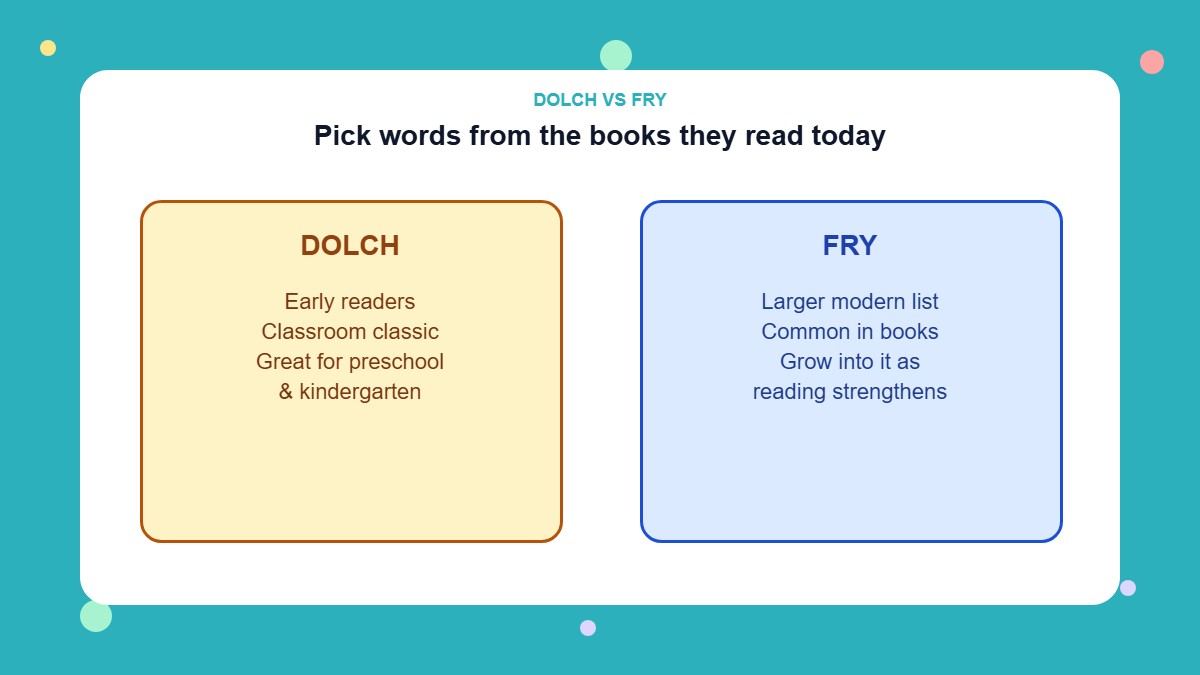
Parents and teachers often come across two popular word lists: Dolch Sight Words and Fry Sight Words.
Dolch Sight Words
The Dolch list contains many of the words children encounter in early readers and has been used successfully in classrooms for decades. It's a great place to begin with preschool and kindergarten learners, especially if you're already collecting free sight word worksheets.
Fry Sight Words
The Fry list is larger and includes the most common words found in modern reading materials. As children become stronger readers, many schools gradually introduce Fry words alongside regular classroom reading and reading practice pages.
Which list should you choose?
Rather than worrying about which list is “better,” focus on teaching words your child will actually encounter in books they are reading today. Consistent practice matters far more than the name of the list.
11. Common Mistakes When Teaching Sight Words
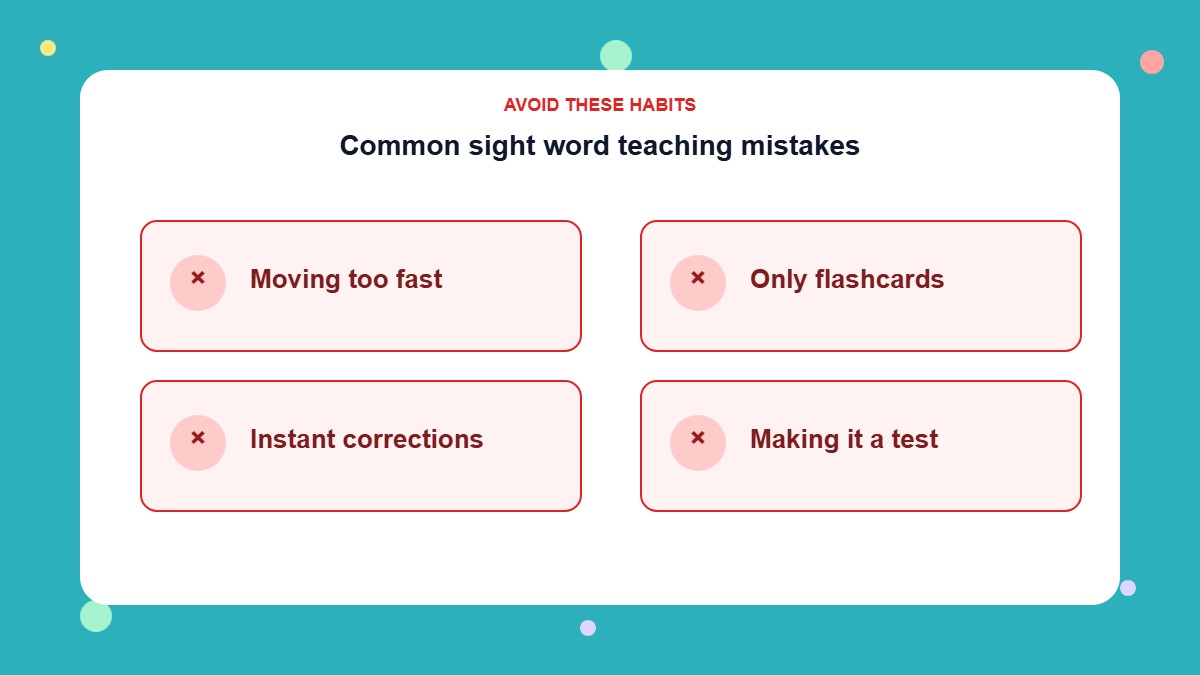
Even experienced teachers occasionally fall into habits that make learning more difficult than it needs to be. A few of the same principles show up in our guide on how to be a good teacher: keep lessons clear, kind, and paced for the learner in front of you.
Moving too quickly
One mistake is moving too quickly. Children need repeated exposure before words become automatic, so introducing large lists every week usually leads to frustration.
Relying only on flashcards
Another common mistake is relying only on flashcards. While printable flashcards have their place, children also need opportunities to read, write, speak, and use sight words naturally in books and conversations.
Correcting every mistake immediately
Some adults also correct every mistake immediately. Instead, give children a few seconds to think before offering help. Those extra moments encourage independent problem-solving and build confidence.
Turning every lesson into a test
Finally, avoid making every lesson feel like a test. Reading should remain enjoyable. Children who associate sight words with positive experiences are far more likely to stay motivated — and that motivation carries into handwriting and phonemic awareness work, too.
12. Bringing Everything Together
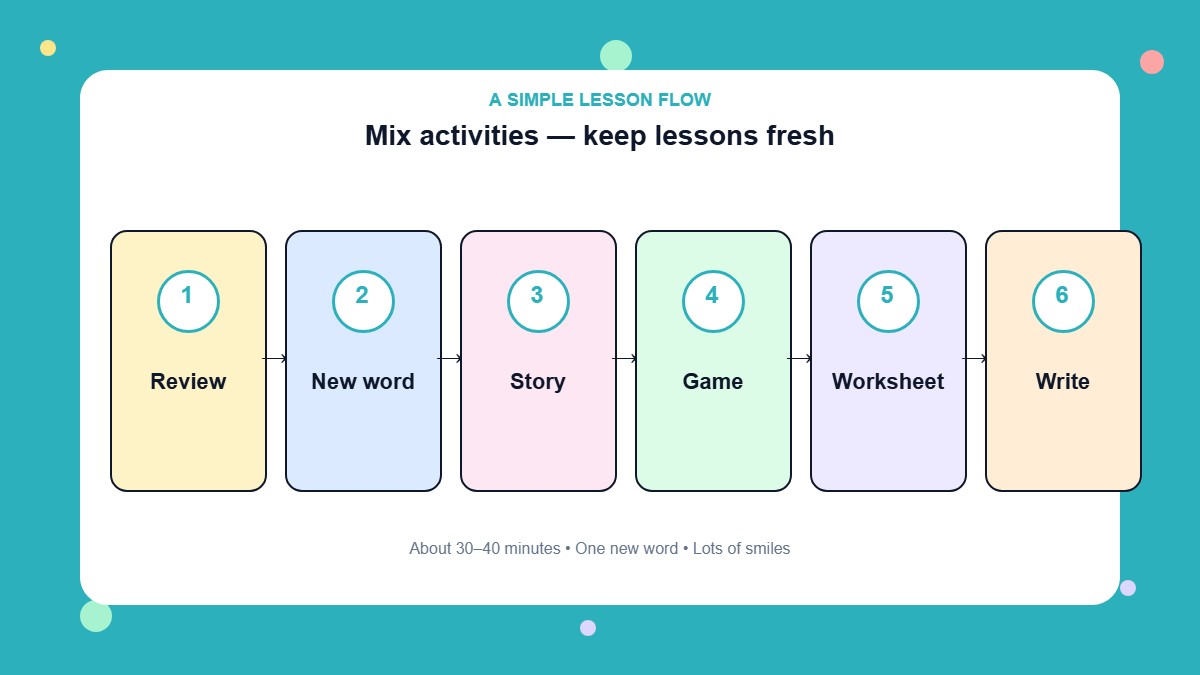
The best sight word lessons combine several different activities instead of repeating the same exercise every day. If you like planning ahead, our lesson plans library is a handy place to borrow structure without overcomplicating the day.
A simple lesson flow
A simple lesson might look like this:
Warm-up and new word
- Review yesterday's words.
- Introduce one new word.
Practice through reading and play
- Read a short story together.
- Play a quick game.
Independent practice and wrap-up
- Complete one worksheet.
- Finish by writing a few simple sentences using the new word.
Keep the goal in focus
This approach keeps lessons fresh while giving children repeated exposure in different ways. It also mirrors how many families teach English to beginners: small steps, lots of speaking, and plenty of meaningful practice.
Remember, the goal isn't to memorize hundreds of words as quickly as possible. It's to help children become confident readers who recognize common words naturally as they read.
13. Final Thoughts
Learning sight words is not about racing through a checklist. It's about giving children the confidence to open a book and enjoy reading without feeling overwhelmed.
Whether you're teaching a preschooler their very first words, helping a kindergartener build reading confidence, or supporting an older child who needs extra practice, patience and consistency will always make the biggest difference.
Keep lessons short, celebrate every success, and remember that every confident reader started with just a handful of simple words. Over time, those words become sentences, those sentences become stories, and those stories become a lifelong love of reading — supported by strong fluency practice and joyful daily reading.
Frequently Asked Questions
Common questions answered for downloading and using our premium printable designs.





Comments (0)
Leave a Reply
Be the first to leave a comment!